This week, a paper caught my attention: “Effects of Ketogenic Diet on Cognitive Impairment in Older Adults: A Systematic Review and Meta-Analysis.”(1) The authors pooled 12 randomized controlled trials to ask a question that matters to many of my readers. Does a ketogenic diet improve cognition in people whose memory and thinking are slipping?
This one is personal for me. Before I recovered, I lived with secondary progressive multiple sclerosis (MS). I spent four years in a tilt-recline wheelchair, with worsening fatigue, depression, and brain fog. I was on the verge of being forced into medical retirement. The research that helped me turn things around started with one idea: our brain cells are only as healthy as the mitochondria that power them.
In this blog, I’ll explain why ketones can fuel the brain, walk through what this meta-analysis found about the ketogenic diet and cognition, and share what you can do with this information, including if you live with MS.
Why Would a Ketogenic Diet Help Cognition?
First, let me explain why researchers think ketones might help the brain.
The number of people living with dementia worldwide is projected to rise from about 57 million in 2019 to nearly 153 million by 2050.(2) Mild cognitive impairment (MCI) is the stage before dementia, when memory and thinking are measurably worse but a person can still manage daily life.
Your brain is about 2% of your body weight, yet it uses roughly 20% of your energy. Brain cells run mostly on glucose. As we age, and especially in MCI and Alzheimer’s disease, the brain becomes less able to use glucose. Starved brain cells struggle to make adenosine triphosphate (ATP), the energy molecule our cells use to drive the chemistry of life.(3)
Ketones are the backup fuel. When you sharply cut carbohydrates, fast, or eat medium-chain triglycerides (MCTs, found in coconut oil), your liver makes ketones, mainly beta-hydroxybutyrate (BHB) and acetoacetate. These cross into the brain and feed its mitochondria.
Here is the hopeful part. Studies using PET (positron emission tomography) scans, which use a tiny amount of a tracer to show how the brain takes up and uses fuel, show that the brain’s ability to take up ketones stays relatively intact in Alzheimer’s disease, even as glucose uptake falls.(4) Researchers call this “brain energy rescue.”(5) Ketones also act as signaling molecules that influence mitochondrial function, oxidative stress, and inflammation.(6)
Study Details
The team, from Wuhan University, included randomized controlled trials of at least four weeks in adults aged 60 or older with MCI or Alzheimer’s disease.(1) Twelve trials with 707 participants qualified, lasting one to six months.
The “ketogenic” interventions varied widely: classic or modified ketogenic diets (two trials), modified Atkins diets (two trials), both at about 20 grams of carbohydrate a day; MCT drinks, oils, or jelly added to the usual diet (seven trials); and 2 tablespoons of virgin coconut oil daily (one trial).
Data and Results
Overall cognition improved. Across ten trials (499 people), ketogenic strategies produced a small but statistically significant improvement compared with control groups.(1)
Memory and language improved; attention and executive function did not. These domain results came from just three trials each.
The full diet showed the largest effect. The classic ketogenic diet had the biggest effect, followed by MCT products. The modified Atkins and coconut oil trials did not show significant benefit on their own. In individual trials, people with MCI on a very low-carbohydrate diet for six weeks improved verbal memory,(7) people with Alzheimer’s disease on a modified ketogenic diet for 12 weeks improved daily function and quality of life,(8) and a six-month ketogenic MCT drink improved several cognitive tests in MCI.(9)
Ketones and cholesterol both went up. Blood ketones rose substantially. Total cholesterol rose by roughly 13 mg/dL and LDL cholesterol by roughly 11 mg/dL, while triglycerides and HDL did not change.
Side effects were mostly in the gut, especially with MCT products, and dropout rates ran as high as 48%.
Discussion of the Results
The authors are candid about the limits.(1) The trials were small and short, so we do not know whether the benefits last for years. “Ketogenic” meant very different things; drinking an MCT beverage with breakfast is not the same as rebuilding your whole diet. Several trials could not be blinded, and the trials did not consistently test whether higher ketone levels predicted greater improvement.
The cholesterol rise deserves attention, especially in older adults with higher cardiovascular risk. Part of it may come from the type of fat. A meta-analysis of clinical trials found that coconut oil raises LDL cholesterol more than non-tropical plant oils such as olive and soybean oil.(10)
What Does This Mean for People with MS?
This meta-analysis studied MCI and Alzheimer’s disease, not MS. Still, brain fog, slowed processing, and memory problems are common in MS, and mitochondrial dysfunction contributes to brain cell loss in progressive disease. We now have ketogenic diet trials in MS, too:
- In a German randomized trial of 105 people with relapsing-remitting MS, cognitive processing speed improved after 18 months on a ketogenic diet compared with where participants started. New MRI lesions did not differ between groups, and 28% of the ketogenic group dropped out.(11)
- In my lab at the University of Iowa, an MCT-based ketogenic diet produced nutritional ketosis, but a modified Paleolithic diet produced greater improvements in fatigue and quality of life.(12) Our earlier multimodal program, combining diet with other lifestyle changes, improved mood and cognitive function in people with MS.(13)
- My team has since run a 24-month randomized trial comparing a time-restricted, olive oil–based ketogenic diet with a modified Paleolithic elimination diet and usual care in 162 people with relapsing-remitting MS.(14) We don’t have the results from this trial yet.
The lesson I take from these studies: ketosis is a tool, not a magic switch. Food quality and whether you can stick with the plan matter at least as much as your ketone number.
My Take on This Study as a Researcher and Clinician
I have lived on both sides of this. As a physician-researcher, I see a well-done meta-analysis with a modest, real signal and honest caveats. As someone who went from a tilt-recline wheelchair and brain fog to biking 20 miles, and now to jogging, conducting clinical trials, and writing books, I know how much a fuel-starved brain can change when we give our mitochondria what they need.
Memory improved, and memory loss is one of the earliest and most frightening signs of cognitive decline. The full ketogenic diet had the largest effect, which matches what I see clinically. Adding MCT oil to a diet built on sugar and white flour is not the same as rebuilding your plate around quality protein, healthy fats, and non-starchy vegetables. That is why Wahls Paleo Plus™, my version of a nutrient-dense ketogenic diet, includes a measured amount of non-starchy vegetables and berries each day, with olive oil as a key fat.
The cholesterol rise is a reason to monitor, not to panic. If you try a ketogenic diet, ask your clinician to check a lipid panel before you start and again 12 weeks in. If LDL climbs, shift more of your fat toward olive oil, avocado, nuts, and fish rather than coconut oil and butter.
Ketogenic diets are not right for everyone. I do not recommend them without medical supervision for people taking insulin or other diabetes medications, people who are pregnant or breastfeeding, or anyone with a history of disordered eating. When I help a patient start a ketogenic diet, I ask about any history of an eating disorder and about the level of family commitment and support. I teach them how to monitor their blood ketones, and I monitor their lipids and their weight to make sure they do not lose too much.
Next Steps for You
One study cannot tell you what will happen in your own brain, or whether your cholesterol will climb to a dangerous level. But what you eat changes how your brain is fueled, and that is something you can act on today. Work with your medical team to monitor your response as you change your diet.
Food First
- Eliminate added sugar and white flour. They are stripped of nutrients, spike blood sugar, and feed the wrong microbes.
- Count your carbs. Limit net carbohydrates (total carbohydrates minus fiber) to 35 grams or less per day. Eat more salads and non-starchy vegetables, and keep berries to ½ cup or less each day.
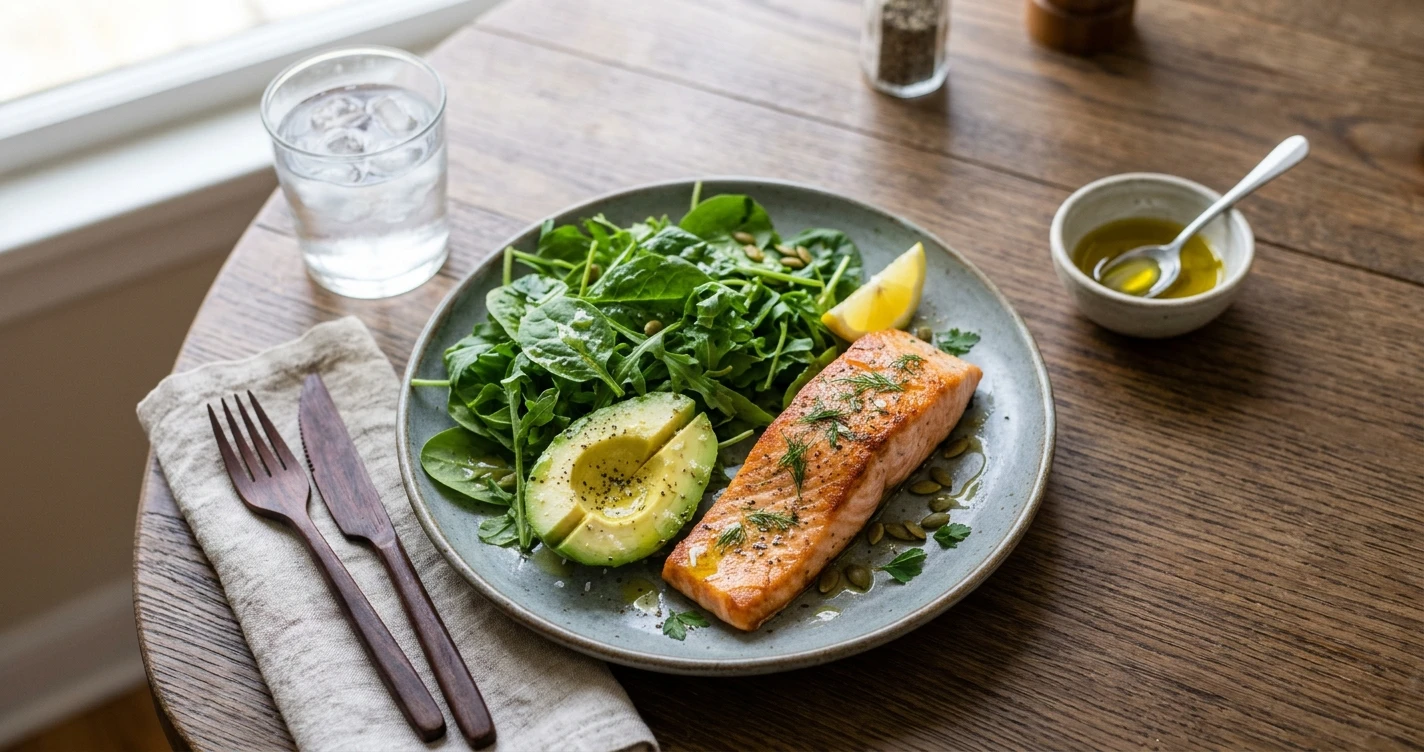
- Choose your fats wisely. Make extra-virgin olive oil, avocado, olives, nuts, and wild-caught fatty fish your main fats.
- Get adequate protein from fish, poultry, grass-fed meat, and organ meats, and add fermented foods such as sauerkraut and kimchi.
Targeted Supplements for Brain Energy
A ketogenic diet narrows the foods you eat, which can leave gaps. Two supplements I recommend alongside a ketogenic or Wahls Paleo Plus™ diet:
- Omega-3 fish oil (MindFuel Omega). DHA is a key structural fat in brain cell membranes. In a six-month randomized trial of 485 older adults with age-related memory decline, 900 mg of DHA per day improved learning and memory compared with placebo.(15) MindFuel Omega provides 900 mg of combined EPA and DHA per serving to help maintain healthy omega-3 levels.
- A mitochondrial multivitamin (MitoMulti Complete). Mitochondria need B vitamins, magnesium, and other cofactors to turn ketones and glucose into ATP. MitoMulti Complete provides activated B vitamins and minerals plus mitochondrial support ingredients, including lipoic acid and acetyl-L-carnitine, to support cellular energy production.
Work with Your Medical Team
Do this alongside your medical team, not instead of them. Keep taking your disease-modifying therapy or other prescribed medications, and talk with your clinician before starting a ketogenic diet, especially if you take medication for diabetes or blood pressure. Exercise daily at whatever level you can, and ask for a physical therapy consult to design a safe program.
Want to Go Deeper?
If you want to understand how mitochondria, metabolism, and aging shape the health of your brain’s wiring, my course The Ultimate Myelin Repair Toolkit for People with MS covers the science and what you can do about it, including natural compounds that act on repair pathways and longevity medicine for your mitochondria.
Closing Thoughts
This meta-analysis does not prove that a ketogenic diet will restore memory. It does show that changing the brain’s fuel supply can move cognition in the right direction within months. Talk with your medical team, start with food, and give your mitochondria what they need.
References
- Xi L, Wan J, Hua Y, Guo M, Du J, Luo X, et al. Effects of ketogenic diet on cognitive impairment in older adults: a systematic review and meta-analysis. Arch Gerontol Geriatr. 2026;151:106409.
- Nichols E, Steinmetz JD, Vollset SE, Fukutaki K, Chalek J, Abd-Allah F, et al. Estimation of the global prevalence of dementia in 2019 and forecasted prevalence in 2050: an analysis for the Global Burden of Disease Study 2019. Lancet Public Health. 2022;7(2):e105-e125.
- Cunnane SC, Courchesne-Loyer A, Vandenberghe C, St-Pierre V, Fortier M, Hennebelle M, et al. Can ketones help rescue brain fuel supply in later life? Implications for cognitive health during aging and the treatment of Alzheimer’s disease. Front Mol Neurosci. 2016;9:53.
- Croteau E, Castellano CA, Richard MA, Fortier M, Nugent S, Lepage M, et al. Ketogenic medium chain triglycerides increase brain energy metabolism in Alzheimer’s disease. J Alzheimers Dis. 2018;64(2):551-561.
- Cunnane SC, Trushina E, Morland C, Prigione A, Casadesus G, Andrews ZB, et al. Brain energy rescue: an emerging therapeutic concept for neurodegenerative disorders of ageing. Nat Rev Drug Discov. 2020;19(9):609-633.
- Puchalska P, Crawford PA. Metabolic and signaling roles of ketone bodies in health and disease. Annu Rev Nutr. 2021;41:49-77.
- Krikorian R, Shidler MD, Dangelo K, Couch SC, Benoit SC, Clegg DJ. Dietary ketosis enhances memory in mild cognitive impairment. Neurobiol Aging. 2012;33(2):425.e19-425.e27.
- Phillips MCL, Deprez LM, Mortimer GMN, Murtagh DKJ, McCoy S, Mylchreest R, et al. Randomized crossover trial of a modified ketogenic diet in Alzheimer’s disease. Alzheimers Res Ther. 2021;13(1):51.
- Fortier M, Castellano CA, St-Pierre V, Myette-Côté É, Langlois F, Roy M, et al. A ketogenic drink improves cognition in mild cognitive impairment: results of a 6-month RCT. Alzheimers Dement. 2021;17(3):543-552.
- Neelakantan N, Seah JYH, van Dam RM. The effect of coconut oil consumption on cardiovascular risk factors: a systematic review and meta-analysis of clinical trials. Circulation. 2020;141(10):803-814.
- Bahr LS, Bellmann-Strobl J, Koppold DA, Rust R, Schmitz-Hübsch T, Olszewska M, et al. Fasting, ketogenic, and anti-inflammatory diets in multiple sclerosis: a randomized controlled trial with 18-month follow-up. BMC Nutr. 2025;11:167.
- Lee JE, Titcomb TJ, Bisht B, Rubenstein LM, Louison R, Wahls TL. A modified MCT-based ketogenic diet increases plasma β-hydroxybutyrate but has less effect on fatigue and quality of life in people with multiple sclerosis compared to a modified Paleolithic diet: a waitlist-controlled, randomized pilot study. J Am Coll Nutr. 2021;40(1):13-25.
- Lee JE, Bisht B, Hall MJ, Rubenstein LM, Louison R, Klein DT, et al. A multimodal, nonpharmacologic intervention improves mood and cognitive function in people with multiple sclerosis. J Am Coll Nutr. 2017;36(3):150-168.