This week, a paper caught my attention because it asks one of the most important questions in multiple sclerosis (MS) research: why have so many promising myelin repair drugs failed in people? "Remyelination and Neuroprotection Translational Trials: Lessons from Optic Neuritis"(1) is a review from neurologists and ophthalmologists at the Sorbonne in Paris. It looks at 20 years of trials that used the visual system to test drugs designed to repair myelin and protect nerve cells.
In this blog, I'll explain why the eye is such a useful window into the brain, walk you through which remyelination trials succeeded and which failed, and share what you can do now to create a better environment for repair.
Why the Eye Is a Window to the Brain
First, let me explain optic neuritis. The optic nerve carries signals from the eye to the brain. In MS, the immune system can attack the myelin, the insulating sheath around the nerve, causing inflammation, blurred vision, and pain with eye movement. Up to half of people with MS will have an episode of optic neuritis during their lifetime.1,2 And nearly half of eyes with no history of optic neuritis still show silent optic nerve lesions on MRI.1
The visual system gives researchers two tools that are hard to get anywhere else in the brain:
- Visual evoked potentials (VEP) measure how fast a signal travels from the eye to the back of the brain. Myelin makes signals travel faster, so a shorter delay suggests repair.
- Optical coherence tomography (OCT) is a quick, painless scan that measures the thickness of nerve fiber and nerve cell layers in the retina. Thinning means nerve cells and their axons, the long wires that carry signals, have been lost.
Together, these let researchers watch both myelin repair and nerve protection in the same pathway.
Why Myelin Matters for Nerve Survival
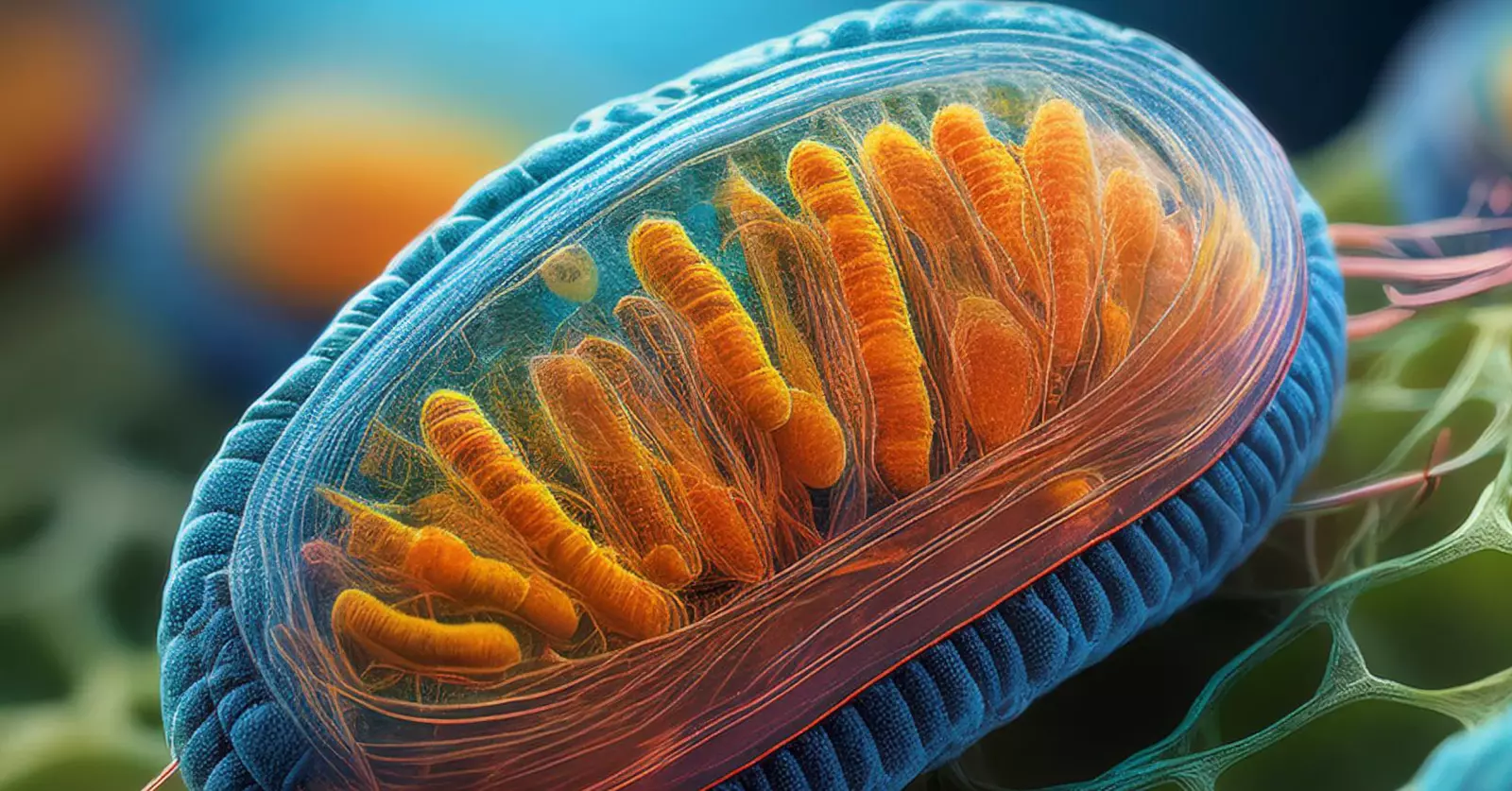
Myelin is not just insulation. The oligodendrocytes that make myelin also feed the axons they wrap, delivering fuel to keep the axon's mitochondria running.3 When myelin is lost, the axon starves. Mitochondria fail, energy runs out, and the axon eventually dies. In animal studies, remyelinated axons were preferentially preserved, while those that stayed demyelinated degenerated.4
This is why I have been talking about minding your mitochondria for years. Myelin repair and nerve protection are two sides of the same coin.
What the Trials Found
The authors reviewed the major remyelination and neuroprotection trials that used vision as an outcome. The headline is sobering: to date, no phase 3 trial has met its primary endpoint for either goal.1
Remyelination Trials
Opicinumab (RENEW): This antibody blocks LINGO-1, a brake on oligodendrocyte maturation. In 82 people with acute optic neuritis, it missed its primary goal at 24 weeks, though patients who completed treatment as planned had 34% better VEP recovery.5 Later trials in broader MS populations did not improve disability.1
Clemastine (ReBUILD): Clemastine is an old antihistamine identified in a screen of drugs that promote myelin formation.6 In 50 people with relapsing MS and long-standing optic nerve damage, VEP delay improved by 1.7 milliseconds per eye.7 It was the first positive remyelination trial in established, chronic lesions.
Bexarotene (CCMR One): This drug missed its primary goal,8 but people who started with slower VEPs showed a 7.8 millisecond advantage that persisted two years later.9 Side effects ended its development.
Newer trials are testing combinations, including clemastine plus metformin, a diabetes drug, based on evidence that the two work together to help precursor cells mature.1,10
Neuroprotection Trials
The results here are mixed. Phenytoin, a seizure drug, reduced retinal nerve fiber loss by 30% but did not improve vision. Erythropoietin looked promising in a small trial but failed in the larger phase 3 TONE trial. High-dose biotin (MD1003) did not improve visual acuity in people with chronic optic neuropathy.1,11 The most encouraging recent result is privosegtor, which activates growth-factor pathways for nerve survival. Early results showed 43% less retinal nerve cell layer thinning and better low-contrast vision at three months.1
Why Do So Many Trials Fail?
The authors identify several reasons:
- Timing: Treatment likely works best early, but recruiting people in the first days after optic neuritis is difficult. In chronic damage, the possible effect is smaller.
- Messy measurements: VEP results vary between centers and equipment. Up to 37.5% of patients in one trial had to be excluded because their VEPs could not be recorded at all.
- Surrogates are not outcomes: A faster nerve signal does not always mean better vision in daily life. In RENEW, VEP improved, but vision and retinal scans did not.
- Different starting points: People begin with very different amounts of damage, which hides treatment effects.
The authors conclude that future success will likely require combining therapies, especially early on, so that remyelination and neuroprotection happen together.1
One detail stood out to me. In a mouse model, exercise and brain stimulation improved VEPs, but mainly by calming inflammation rather than by rebuilding myelin.12 Lifestyle changes the environment in which repair happens.
My Take
As a researcher, I agree with the authors' conclusion. A single drug acting on a single pathway is unlikely to repair myelin in a brain that is inflamed, low on nutrients, and short on energy. Oligodendrocyte precursor cells need building blocks, healthy mitochondria, and a calm immune environment to mature and make new myelin.
This is also why drugs that work beautifully in mice so often have little effect in people. Laboratory mice eat the same chow, sleep on the same schedule, and live in the same cages. People with MS vary enormously in diet, sleep, stress, movement, and nutrient status. Those differences change the environment that any repair drug has to work in.
As a physician, I have lived on both sides of this. I was diagnosed with MS in 2000 and by 2003 had progressed to secondary progressive disease. I spent four years in a tilt-recline wheelchair. In the fall of 2007, I began the program that became the Wahls Protocol®. One year later, I biked 18.5 miles. I believe that as I recovered, I dramatically improved my ability to repair myelin. Today I jog and strength train.
My own vision history is brief. Thirteen years before my MS diagnosis, I had a single episode of dim vision while roller skiing on a hot August day. I have not had another episode since. Dim vision brought on by heat and exercise is a classic description of Uhthoff's phenomenon, in which a rise in body temperature temporarily slows signals along nerves that have lost myelin. It is one more reminder of how sensitive the visual pathway is to the health of our myelin.
In my lab at the University of Iowa, our first study combined diet, supplements, exercise, electrical stimulation, and stress reduction for people with progressive MS, and participants reported less fatigue and higher quality of life.(13) That is the combined approach these authors are now calling for, applied to the whole person. My team has also reviewed the evidence on diet and autoimmune demyelinating optic neuritis specifically.(14)
Next Steps for You
If you have a sudden change in vision, eye pain, or vision loss, contact your neurologist or eye doctor right away. Early care matters.
Food First
- Eliminate added sugar and foods made with white flours. They are stripped of nutrients and feed the wrong microbes.
- Work toward nine cups of vegetables and fruit a day: three cups leafy greens, three cups sulfur-rich (cabbage family, onion family, mushrooms), and three cups deeply colored.
- Eat omega-3 rich fish and adequate protein. Myelin is made of fat and protein, and your oligodendrocytes need both.
- Consider eliminating gluten, dairy, and eggs to calm the immune system.
Targeted Supplements for Myelin Support
I suggest a good multivitamin/multimineral (Advanced Multi), vitamin D3 with K2 (D3K2 5000iu), fish oil (MindFuel Omega), and magnesium (Better Brain Mag) to support healthy mitochondria and brain cells. I have included all of these in the Wahls Protocol® Basic Support Kit. For additional mitochondrial support, consider adding Activated B's.
Move Every Day
Exercise daily, and ask for a physical therapy consult to design a program that fits your body.
Talk With Your Neurologist
Don't start clemastine or metformin on your own. Doses and side effects need medical oversight, and remyelination drugs are still experimental. Ask your neurologist whether you qualify for a remyelination clinical trial.
Do this alongside your medical team, not instead of them.
Want to Go Deeper? The Ultimate Myelin Repair Toolkit
This paper shows that that no single drug is the answer yet. If you want to understand the science and build the best possible environment for repair now, my course, The Ultimate Myelin Repair Toolkit for People with MS, walks you through it in four parts:
- Myelin repair drugs in the pipeline, including the trials in this review, and how to evaluate the next breakthrough headline
- Natural products and remyelination: compounds and foods that act on the same pathways as drugs in development
- Why drugs work in rodents but fail in humans, and how to create a more supportive environment for repair
- Longevity medicine and remyelination: mitochondria, AMPK, mTOR, and cellular senescence, the aging pathways that lifestyle and supplements target
Enroll in The Ultimate Myelin Repair Toolkit and learn at your own pace.
Closing Thoughts
While researchers work out the right drug combinations that may accelerate myelin repair in the future, you can begin working today on your environment: nutrients, mitochondria, movement, and a calmer immune system.
References
- Louapre C, Beigneux Y, Maestri F, Meyniel C, Touitou V. Remyelination and neuroprotection translational trials: lessons from optic neuritis. Rev Neurol (Paris). 2026;182:478-87.
- Toosy AT, Mason DF, Miller DH. Optic neuritis. Lancet Neurol. 2014;13:83-99.
- Lee Y, Morrison BM, Li Y, Lengacher S, Farah MH, Hoffman PN, et al. Oligodendroglia metabolically support axons and contribute to neurodegeneration. Nature. 2012;487:443-8.
- Irvine KA, Blakemore WF. Remyelination protects axons from demyelination-associated axon degeneration. Brain. 2008;131:1464-77.
- Cadavid D, Balcer L, Galetta S, Aktas O, Ziemssen T, Vanopdenbosch L, et al. Safety and efficacy of opicinumab in acute optic neuritis (RENEW): a randomised, placebo-controlled, phase 2 trial. Lancet Neurol. 2017;16:189-99.
- Mei F, Fancy SPJ, Shen YAA, Niu J, Zhao C, Presley B, et al. Micropillar arrays as a high-throughput screening platform for therapeutics in multiple sclerosis. Nat Med. 2014;20:954-60.
- Green AJ, Gelfand JM, Cree BA, Bevan C, Boscardin WJ, Mei F, et al. Clemastine fumarate as a remyelinating therapy for multiple sclerosis (ReBUILD): a randomised, controlled, double-blind, crossover trial. Lancet. 2017;390:2481-9.
- Brown JWL, Cunniffe NG, Prados F, Kanber B, Jones JL, Needham E, et al. Safety and efficacy of bexarotene in patients with relapsing-remitting multiple sclerosis (CCMR One): a randomised, double-blind, placebo-controlled, parallel-group, phase 2a study. Lancet Neurol. 2021;20:709-20.
- McMurran CE, Mukherjee T, Brown JWL, Coles AJ, Cunniffe NG. Bexarotene leads to durable improvements in visual evoked potential latency: a follow-up study of the Cambridge Centre for Myelin Repair One trial. Mult Scler. 2024;30:1066-71.
- Riboni-Verri G, McMurran CE, Mukherjee T, Daruwalla C, Holland J, Gautam R, et al. The Cambridge Centre for Myelin Repair trial Two (CCMR Two): a trial protocol for a phase 2a, randomised, double-blind, placebo-controlled clinical trial of the ability of the combination of metformin and clemastine to promote remyelination in people with relapsing-remitting multiple sclerosis already on disease-modifying therapy. Trials. 2025;26:562.
- Tourbah A, Gout O, Vighetto A, Deburghgraeve V, Pelletier J, Papeix C, et al. MD1003 (high-dose pharmaceutical-grade biotin) for the treatment of chronic visual loss related to optic neuritis in multiple sclerosis: a randomized, double-blind, placebo-controlled study. CNS Drugs. 2018;32:661-72.
- Rossi E, Marenna S, Castoldi V, Criscuolo E, Giuliani B, Malacrida C, et al. Tracking remyelination in a model of multiple sclerosis: visual evoked potentials reveal therapeutic effect from brain stimulation and exercise. Exp Neurol. 2026;397:115565.
- Bisht B, Darling WG, Grossmann RE, Shivapour ET, Lutgendorf SK, Snetselaar LG, et al. A multimodal intervention for patients with secondary progressive multiple sclerosis: feasibility and effect on fatigue. J Altern Complement Med. 2014;20(5):347-55.
- Plafker SM, Titcomb T, Zyla-Jackson K, Kolakowska A, Wahls T. Overview of diet and autoimmune demyelinating optic neuritis: a narrative review. Immunometabolism (Cobham). 2023;5(2):e00022.