The U.S. Army plans to detonate about 5 tons of degraded lead azide at the Iowa Army
Ammunition Plant in Middletown as soon as Monday, November 23. Lead azide is a lead-based explosive used to trigger the main charges in some munitions. The blast is expected to send a plume of lead dust downwind that will settle on soil, playgrounds, cars, and buildings.
The timing could still change. A federal appeals court put the EPA's emergency permit on hold, but the Army has told the court it intends to proceed by November 24, citing the risk of an uncontrolled blast as temperatures drop. Fort Madison officials say they were told it will happen Monday or Tuesday.
Where Will the Lead Go?
Monday's forecast calls for light winds out of the northwest, about 5 to 10 mph. That would carry the plume slowly south-southeast, toward Burlington and western Illinois, rather than north toward the Quad Cities.
Forecasts shift. Check the Army's official plume maps, which will be updated six hours before the detonation and hourly until it occurs: https://www.army.mil/asc#org-iowa-army-ammunition-plant
What We Don't Know
We do not know how much lead will be released into the air, or how much will end up in our soil, rivers, groundwater, and drinking water.
The EPA says it has had a team in Middletown since November 16 collecting samples, and it is assessing drinking water sources. The EPA permit also requires the Army to sample before and after the detonation. But no one has announced a plan to test the soil around our homes and farms, and there is no commitment to make the results public.
I would feel much better about public safety if there were a plan for independent monitoring of lead in the air, soil, and water before and after the detonation, with the results published.
We Can Test Our Own Soil
Until that happens, we the public can do our own sampling, at least of the soil around our homes and on our farms.
I am using the University of Minnesota Soil Testing Laboratory. Their lead test costs $23 per sample, and their website explains how to fill out the request sheet, package your soil, and mail it: https://soiltest.cfans.umn.edu/testing-services/lawn-garden
How to collect your samples:
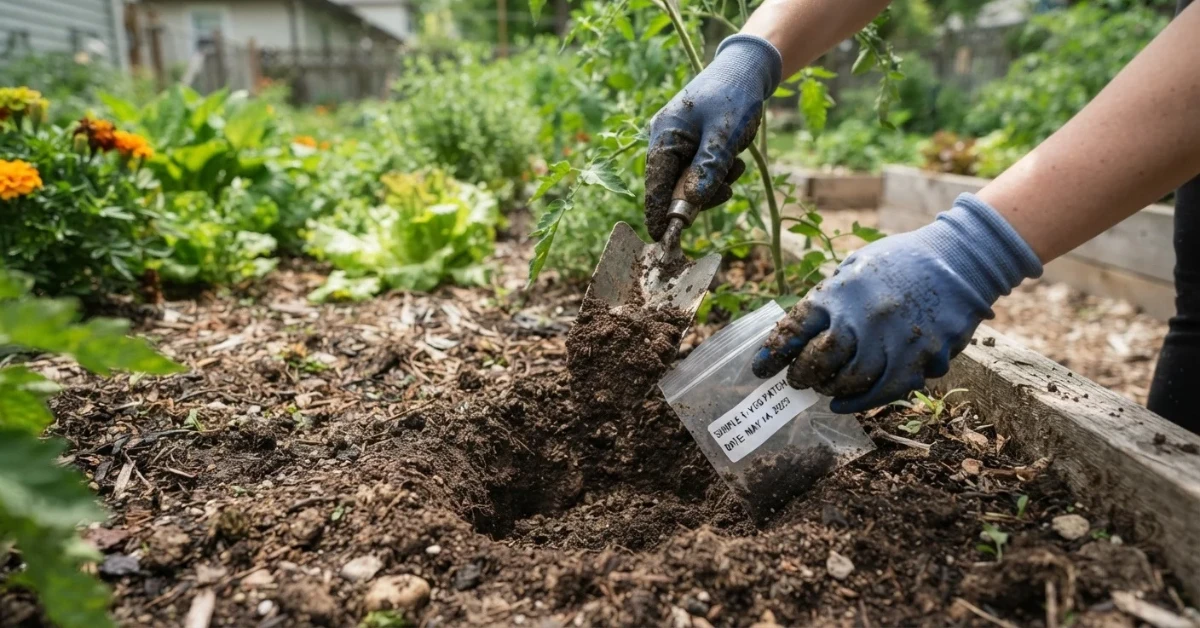
- Sample the surface only. Scrape just the top ¾ inch of soil. That is where new dust settles. Deeper samples dilute it.
- Mix several scoops. Take 5 to 10 small scoops from each area and mix them into one sample of about 2 cups.
- Keep areas separate. Send a separate sample for each area you care about: a play area, a vegetable garden, a pasture, the yard.
- Avoid the house drip line. Old paint can raise lead near the foundation, which would confuse the results.
- Mark your spots. Use a flag or take a phone photo so you can sample the same places each time.
- Keep it clean. Wear gloves, use a clean stainless steel trowel, and put each sample in a fresh bag. Label it with the date, location, and "before" or "after."
- Order the lead test. Lead is a separate test from the regular garden test and needs its own sample.
When to sample:
- Before: Today, or Monday morning before the detonation.
- Soon after: 1 to 3 days after the Army announces the airborne exposure period has ended. Don't hose down or disturb your sampling spots first.
- One week after.
- In the spring, to see what lead stays and what moves.
The most useful result is the comparison. A rise from your own "before" sample means more than any single number.
Protect Your Family
Iowa HHS recommends these precautions:
- Keep windows and doors closed for 24 to 48 hours after the detonation, unless officials say otherwise.
- After the Army says the airborne exposure period has ended, wet-clean playground equipment, toys, and windowsills with soap and water. Don't dry sweep.
- Remove shoes when you come inside, and wash hands before eating.
- Consider washing your car and replacing the cabin air filter.
- Blood lead testing is the only recommended way to check for exposure. If you have children under six or are pregnant, talk with your clinician about testing.
- If you have a private well, contact your county health department. Iowa's Private Well Grants Program offers free well testing, but lead is not part of the standard panel, so ask about a separate lead test.
Call Your Elected Officials
In March, the Army hired MuniRem Environmental to chemically neutralize this lead azide. Two months later, the Army canceled the contract. The Army's own assessment acknowledged that chemical treatment would avoid the lead dust plume that a blast will produce.
Call your elected officials and ask for an investigation into why the Army canceled that contract. Ask for independent, public monitoring of lead in our air, soil, and water.
And test your soil before and after the detonation.
References
- Iowa HHS. Planned Lead Azide Detonation Fact Sheet, November 23, 2026. https://hhs.iowa.gov/media/19822
- KCRG. Army says it will proceed with lead azide detonation. November 22, 2026. https://www.kcrg.com/2026/11/22/federal-court-gives-epa-noon-sunday-deadline-response-administrative-stay/
- Iowa Public Radio. Report shows the Army canceled a chemical treatment contract before opting to detonate toxic explosives in Iowa. November 21, 2026. https://iowapublicradio.org/environment/2026-11-21/army-canceled-a-chemical-treatment-contract-toxic-explosives-iowa
- EPA Region 7. IAAAP Lead Azide site profile. https://response.epa.gov/site/siteprofile.aspx?siteid=17211
- WISN. Army detonation of lead azide in Iowa: Wisconsin should not see effects on Monday. https://www.wisn.com/article/iowa-lead-bomb-wisconsin-map-azide-army/74479981
- Farm Progress. How to prepare your farm for the Iowa lead detonation. https://www.farmprogress.com/farm-life/how-to-prepare-your-farm-for-the-iowa-lead-detonation
- University of Minnesota Soil Testing Laboratory. Lawn and Garden request sheet, 2026 (lead sampling depth). https://soiltest.cfans.umn.edu/sites/soiltest.cfans.umn.edu/files/2025-12/lawnandgarden_2026.pdf
- Iowa DNR. Private Well Testing. https://iowadnr.gov/Environmental-Protection/Water-Quality/Private-Well-Program/Private-Well-Testing