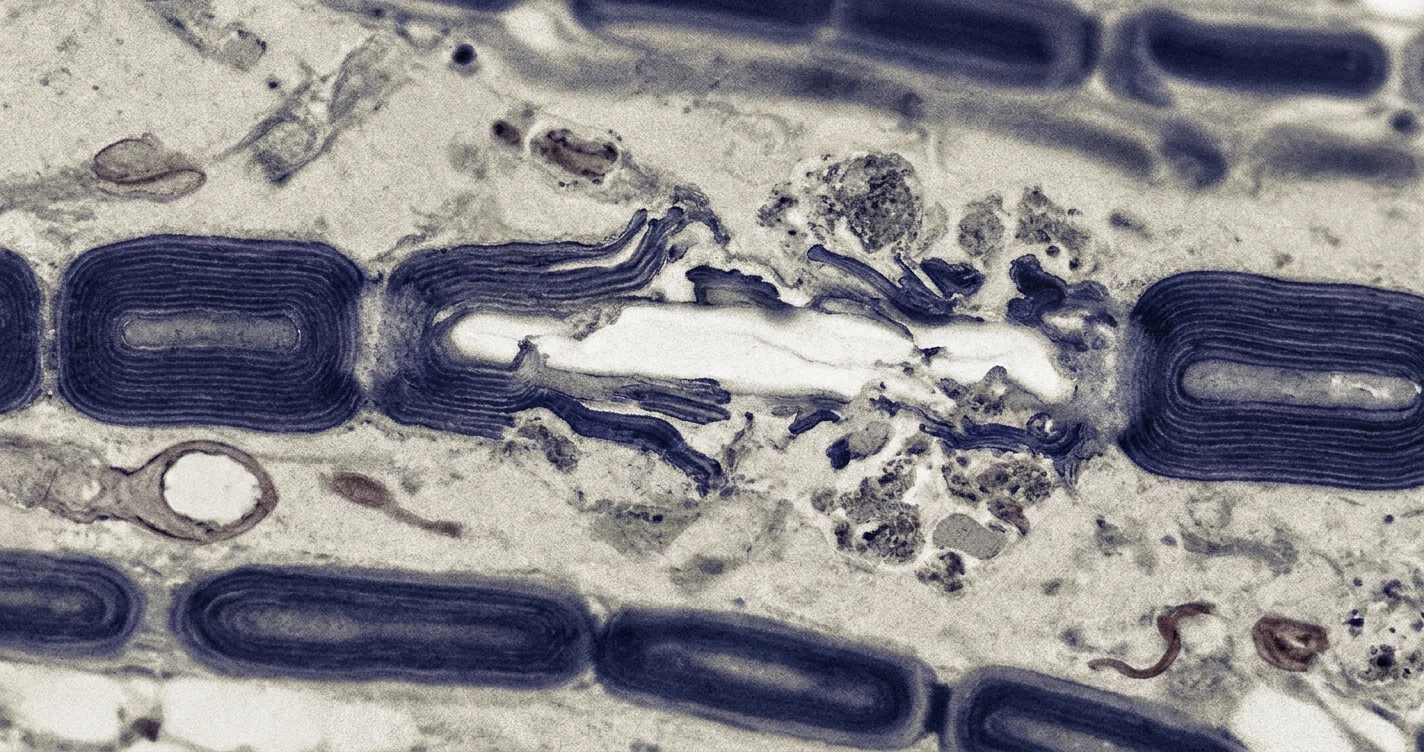
This week, a paper caught my attention because it looks at myelin in a disease most people don't associate with it: Alzheimer's disease. "Myelin Impairment and Regeneration in the Central Nervous System: Molecular Mechanisms, Diseases, and Prospective Therapeutic Targets" reviews the growing evidence that myelin damage may be one of the earliest changes in the Alzheimer's brain.(1)
This one is personal for me. I was diagnosed with relapsing-remitting MS in 2000. By 2003, my disease had become secondary progressive. I underwent chemotherapy to try to slow it down, and I began using a tilt-recline wheelchair because my back muscles had become too weak. I spent four years in that chair.
In 2004, I went back to my basic science roots and spent the next three years studying the research. In the fall of 2007, I began the diet and lifestyle program that became the Wahls Protocol®. In three months, my fatigue was gone. In six months, I was walking without a cane. A year after I started, I did a 20-mile bike ride. My colleagues at the University of Iowa published a case report of my recovery in 2009.(2)
As I recovered, I believe I dramatically improved my ability to repair myelin. And I am still gaining ground. Today I can jog and strength train, and over the last six months I have added four pounds of muscle, documented by body composition analysis. That is why this paper matters so much to me: it suggests the same processes I have been working to support in my own brain may matter for Alzheimer's disease, too.
The authors also review myelin damage in multiple sclerosis (MS), inherited white matter diseases, small vessel disease, psychiatric disorders, and brain and spinal cord injury. If you have MS, I think you will find this one worth your attention.
In this blog, I will translate the key insights from the paper into easy to understand language. I'll also discuss what the research can and cannot tell us yet, and the steps you can take now to support your brain.
What Is Myelin?
First, let me explain myelin. Myelin is the fatty insulation wrapped around the axons, the long wires that carry signals from one nerve cell to the next. In the brain and spinal cord, myelin is made by cells called oligodendrocytes.
Myelin is about 70–75% fat and 25–30% protein. It is rich in cholesterol, phospholipids, and specialized fats called glycosphingolipids. That is one reason I talk so much about the fats in our diet.
For a long time, myelin was thought to be a stable structure. We now know it is remodeled throughout life. When you learn a new skill, your brain makes new oligodendrocytes and new myelin.(3) That constant remodeling takes a great deal of energy, and it makes myelin vulnerable to aging and metabolic stress.
How Myelin Damage May Drive Alzheimer's Disease
For decades, Alzheimer's research has focused on amyloid plaques and tau tangles. But existing Alzheimer's treatments have had limited effectiveness. This review pulls together evidence that myelin breaks down early, possibly before plaques and tangles form.
- Brain imaging shows reduced myelin in people with mild cognitive impairment, and even more loss in people with Alzheimer's dementia.(4)
- Lower myelin content was linked to more rapid cognitive decline in a long-term follow-up study.(5)
- A study published in Nature proposed that damaged myelin drives amyloid buildup in two ways.(6) First, the brain's immune cells, the microglia, get busy cleaning up myelin debris and fall behind on clearing amyloid. Second, axons that lose their myelin support become stressed and make more of the proteins that produce amyloid.
- In mouse models, oligodendrocytes produce amyloid themselves, along with neurons.(7)
The authors note that brain regions with more myelin appear more resistant to tau buildup.(8) In other words, healthy myelin may be protective.
Why Oligodendrocytes Are So Vulnerable
Oligodendrocytes have the highest rate of oxidative metabolism of any cell type in the brain. They also carry more iron than any other brain cell, and they have a limited ability to clear peroxides.(9) That means when the mitochondria struggle, oligodendrocytes are among the first cells to be harmed.
This is why I have been teaching people to mind their mitochondria ever since my TEDx talk, "Minding Your Mitochondria." Oligodendrocytes are a prime example of why that matters.
The authors list the factors that can damage oligodendrocytes and myelin:
- Genetics, including the APOE4 gene, which disrupts how oligodendrocytes handle cholesterol(10)
- Reduced blood flow and low oxygen, which increase oxidative stress
- Inflammation, including from chronic infections
- Changes in the gut microbiome
- Problems with fat and blood sugar metabolism, including type 2 diabetes
- Imbalances in iron, copper, and zinc
If you have followed my work for a while, that list will sound very familiar.
What This Means for People with MS
In MS, the first injury comes from the immune system. In Alzheimer's disease, it may come from aging and metabolic stress. But the authors point out that once the damage begins, the downstream problems are much the same: oligodendrocytes die, the precursor cells fail to mature, and remyelination stalls.
I have lived on both sides of this: as a physician who teaches internal medicine residents and conducts clinical trials, and as a patient with progressive MS. Even with chemotherapy, I kept declining. What turned my health around was focusing on the environment surrounding my brain cells, not just my immune system. Are the mitochondria making enough energy to build new myelin? Is there enough raw material? Is the tissue flooded with inflammation and oxidative stress?
Remyelination Treatments for Alzheimer's: Mostly Animal Studies
The authors review many treatments that improved myelin repair and memory in animal models of Alzheimer's disease. These include clemastine (an older antihistamine), metformin, donepezil, bexarotene, drugs that block LINGO-1 and Nogo-A (two brakes on myelin repair), voluntary running, and transcranial magnetic stimulation.
Nearly all of that evidence comes from mice. For example, clemastine enhanced myelin renewal and reversed memory problems in a mouse model of Alzheimer's disease.(11)
Almost always, a treatment shows a much smaller effect — or none at all — when it is tested in humans. Why does that occur? Animal studies are tightly controlled: what the animals eat, the timing of light and darkness, how much they exercise, and the stress they are exposed to. People eat what they want, exercise at a level of their choosing, and decide for themselves when to sleep.
Clemastine is one of the few remyelination drugs tested in a randomized trial in people with MS, and the benefit was real but modest.(12) Anti-LINGO-1 antibodies looked very promising in animals, but in a phase 2 trial in people with relapsing MS, the antibody opicinumab did not improve disability compared with placebo.(13)
My Take
I find it very encouraging that Alzheimer's researchers are now asking the same question I have been asking for years: what does the nervous system need in order to repair itself? This review is a big step toward seeing myelin as a shared target across many brain diseases, not just MS.
The authors are careful to note that much more research is needed, particularly in humans. We do not yet have an approved drug that repairs myelin.
In my lab at the University of Iowa, we have spent more than a decade testing diet and lifestyle interventions in people with MS. In one of our early pilot studies, people with progressive MS who followed a multimodal program of diet, exercise, electrical stimulation of muscles, and stress reduction had less fatigue and better quality of life.(14) The factors that damage oligodendrocytes — poor metabolic health, oxidative stress, inflammation, and an unhealthy microbiome — are the same ones we target in our trials.
Next Steps for You
If you want to support your brain and your myelin, it is not too late to start. Eliminate sugar and white flour. Aim for my nine cups of vegetables and fruit each day: three cups of leafy greens; three cups of sulfur-rich vegetables like cabbage, broccoli, onions, and mushrooms; and three cups of deeply colored vegetables and berries. Include omega-3 rich fish and fermented foods like sauerkraut and kimchi. Move your body every day, and ask for a physical therapy consult to help design an exercise program.
Talk with your clinician about targeted supplements to support your mitochondria and brain cells: vitamin D3 plus vitamin K2 (D3K2 5000iu), a multivitamin/multimineral (Advanced Multi), magnesium (Better Brain Mag), and fish oil (MindFuel Omega). I have included all four in the Wahls Protocol® Basic Support kit. If memory is a concern, the Wahls Protocol® Memory Support kit adds Brain Protect, which provides additional support for brain mitochondria.
Do this alongside your medical team, not instead of them. These steps will not guarantee repair, but they create a more supportive environment for your brain cells.
Want to Go Deeper?
There is so much emerging research on myelin repair that it can be hard to know what is promising, what has reached human trials, and what has only been shown in mice. That is why I created The Ultimate Myelin Repair Toolkit for People with MS.
In this four-part course, I walk you through:
- The myelin repair drugs in the pipeline, and how to evaluate the next breakthrough headline
- The natural compounds and foods that act on the same pathways drug developers are targeting
- Why drugs work in rodents but often fail in humans, and how to create a more supportive environment for repair
- How advances in longevity medicine, including mitochondrial health, AMPK, and mTOR, may support remyelination
There is no single magic solution for myelin repair. But the more you understand the science, the better questions you can ask your medical team. Enroll in The Ultimate Myelin Repair Toolkit here.
References
- Huang L, Cheng P, Liu G, Xiang Y, Hong Z, Le W. Myelin Impairment and Regeneration in the Central Nervous System: Molecular Mechanisms, Diseases, and Prospective Therapeutic Targets. MedComm. 2026;7:e71017. https://doi.org/10.1002/mco2.71017
- Reese D, Shivapour ET, Wahls TL, Dudley-Javoroski SD, Shields R. Neuromuscular Electrical Stimulation and Dietary Interventions to Reduce Oxidative Stress in a Secondary Progressive Multiple Sclerosis Patient Leads to Marked Gains in Function: A Case Report. Cases J. 2009;2:7601.
- Hughes EG, Orthmann-Murphy JL, Langseth AJ, Bergles DE. Myelin Remodeling Through Experience-Dependent Oligodendrogenesis in the Adult Somatosensory Cortex. Nat Neurosci. 2018;21(5):696–706.
- Bouhrara M, Reiter DA, Bergeron CM, et al. Evidence of Demyelination in Mild Cognitive Impairment and Dementia Using a Direct and Specific Magnetic Resonance Imaging Measure of Myelin Content. Alzheimers Dement. 2018;14(8):998–1004.
- Gong Z, Bilgel M, Kiely M, et al. Lower Myelin Content Is Associated With More Rapid Cognitive Decline Among Cognitively Unimpaired Individuals. Alzheimers Dement. 2023;19(7):3098–3107.
- Depp C, Sun T, Sasmita AO, et al. Myelin Dysfunction Drives Amyloid-Beta Deposition in Models of Alzheimer's Disease. Nature. 2023;618(7964):349–357.
- Sasmita AO, Depp C, Nazarenko T, et al. Oligodendrocytes Produce Amyloid-Beta and Contribute to Plaque Formation alongside Neurons in Alzheimer's Disease Model Mice. Nat Neurosci. 2024;27(9):1668–1674.
- Rubinski A, Franzmeier N, Dewenter A, et al. Higher Levels of Myelin Are Associated With Higher Resistance Against Tau Pathology in Alzheimer's Disease. Alzheimers Res Ther. 2022;14(1):139.
- McTigue DM, Tripathi RB. The Life, Death, and Replacement of Oligodendrocytes in the Adult CNS. J Neurochem. 2008;107(1):1–19.
- Blanchard JW, Akay LA, Davila-Velderrain J, et al. APOE4 Impairs Myelination via Cholesterol Dysregulation in Oligodendrocytes. Nature. 2022;611(7937):769–779.
- Chen JF, Liu K, Hu B, et al. Enhancing Myelin Renewal Reverses Cognitive Dysfunction in a Murine Model of Alzheimer's Disease. Neuron. 2021;109(14):2292–2307.
- Green AJ, Gelfand JM, Cree BA, et al. Clemastine Fumarate as a Remyelinating Therapy for Multiple Sclerosis (ReBUILD): A Randomised, Controlled, Double-blind, Crossover Trial. Lancet. 2017;390(10111):2481–2489.
- Cadavid D, Mellion M, Hupperts R, et al. Safety and Efficacy of Opicinumab in Patients With Relapsing Multiple Sclerosis (SYNERGY): A Randomised, Placebo-Controlled, Phase 2 Trial. Lancet Neurol. 2019;18(9):845–856.
- Bisht B, Darling WG, Shivapour ET, et al. Multimodal Intervention Improves Fatigue and Quality of Life in Subjects With Progressive Multiple Sclerosis: A Pilot Study. Degener Neurol Neuromuscul Dis. 2015;5:19–35.