Dual Detox: How to Clear Heavy Metals and Hormone Disruptors
It is nearly impossible to live in the modern world without carrying some toxin load. In this blog, I will discuss toxin body burden and what a safe, effective heavy metal detox looks like. I’ll walk through common sources of heavy metals and hormone-disrupting chemicals, a few simple steps to reduce your exposure, and the foods and targeted supplements that help your body clear heavy metals and the toxins that throw your hormones out of balance.
I call it a dual detox for two reasons. We are dealing with two big categories of toxins, heavy metals and endocrine disruptors. And your body clears them in two phases, both of which need support.
Why Are Toxins So Hard to Avoid?
It is profoundly difficult to avoid toxins in modern society. We use chemicals to grow food more efficiently, to make processed foods, in industry, and in building our homes. We have replaced human effort with chemical effort. That has improved efficiency and lowered costs, but those chemicals have had unexpected negative health consequences.
The bar a new chemical must clear before it can be used is lower in the United States than in Europe or Canada. As a result, many chemicals that are restricted elsewhere are still found in our food, water, and air. I will focus on two big categories of toxins: heavy metals and endocrine disruptors.
Heavy Metals: Where Do They Come From?
We have much greater exposure to heavy metals like lead, mercury, arsenic, and cadmium than our parents did. Those heavy metals poison our mitochondria, the tiny power plants in our cells. They worsen oxidative stress and inflammation, and they make autoimmune symptoms worse and harder to treat. As I have said for many years, minding your mitochondria is central to healing, and heavy metals work directly against that.
- Common sources of heavy metal exposure include:
- City water pipes (lead)
- Antique glass, pottery, and dishes (lead)
- Cigarette smoke (arsenic and cadmium)
- Paint (lead, cadmium)
- Industry and power plant smokestacks (lead, mercury, arsenic)
- Conventional foods (arsenic in rice and chicken)
Modern environments can expose us to some level of lead, mercury, arsenic, and cadmium through our food, water, and air. And if you are mineral deficient, you are more vulnerable to heavy metals.
Tips for Reducing Heavy Metals
First, improve the quality of your nutrition and consider taking a multivitamin/multimineral (Advanced Multi) to make sure you have not developed a mineral insufficiency, which would increase your risk of heavy metal poisoning.
Then reduce your exposure:
- Stop smoking. If you smoke, quitting will reduce heavy metal exposure for you and your family. Do not vape or use other tobacco products.
- Filter your water, including the water in your ice maker if you use one. If you can, install a reverse osmosis water filter.
- Filter the air in your home with a HEPA air filter. Consider a whole-house air filter if that is an option. Some filters added to your furnace and air conditioning system also use bipolar ionization (such as iWave-R) or UV light to kill viruses and molds. Either of those systems would be ideal.
What Are Endocrine Disruptors?
We also have much greater exposure to pesticides, herbicides, plastics, solvents, and fragrances than our parents did. These compounds are endocrine disruptors, which means they stimulate the hormone receptors in our cells. Because they are foreign to the body, they are called xenobiotics. They can interfere with thyroid function, adrenal function, and sex hormones, but their strongest impact is on the balance of estrogen, progesterone, and testosterone.
Estrogen Dominance in Women and Men
Most of the plastics, herbicides, and fragrances overstimulate estrogen receptors relative to progesterone and testosterone receptors. The effect is called estrogen dominance, and it creates problems for many women and for men.(1-3)
Women who struggle with heavy bleeding, intense menstrual cramps, and mood swings with their periods may have this estrogen dominance, or excess estrogen effect.
Men can also be affected. Men who have low libido or difficulty achieving and maintaining erections may be experiencing an excess estrogen effect.
The Problem with Xenoestrogens (Synthetic Estrogens)
Xenoestrogens are synthetic compounds that stimulate the estrogen receptors in our cell membranes. They create excess estrogen effects in women and in men that disrupt our metabolism and harm our cellular health.(4) This can alter the function of estrogen-dependent tissues, including the breasts, uterus, cervix, and prostate.(5,6) Even at low levels, xenoestrogens can interfere with neurotransmitter function, glucose metabolism, fertility, and estrogen metabolism, leading to heavier periods, more intense menstrual cramping, and mood swings.(5)
The body processes and eliminates xenoestrogens through a complex process in the liver, kidneys, and sweat glands that requires amino acids, vitamins, minerals, energy, and antioxidant support.(7) A variety of plant-based phytonutrients support the phase 1 and phase 2 detoxification processes that increase the excretion of these xenoestrogens.(7) With my patients who may be dealing with an excess estrogen effect, I go through strategies to reduce their exposure to these xenoestrogens.
Tips for Reducing Hormone Disruptors and Xenoestrogens
- Remove plastic water bottles and reduce your use of plastic cookware and food storage. Never microwave food in plastic.
- Reduce exposure to fragrances in personal care products, cleaning products, and scented candles.
- Reduce exposure to pesticides and herbicides by switching to organic foods as your budget allows.
The next step is to support the detoxification of the heavy metals, xenobiotics, and xenoestrogens that are stored in your fat. You will want to support both phases of detoxification so you don’t create more problems as you detox.
Phase 1 and Phase 2 Detoxification: Why a Heavy Metal Detox Needs Both
Detoxification occurs in two phases.
Phase 1 happens mostly in the liver. A side chain is added to the toxic compound to prepare it for a more thorough detoxification step. However, this intermediate compound is sometimes more toxic than the original toxin.
Phase 2 finishes the job, converting that intermediate into a form that can be excreted in the bile, urine, or sweat.
That is why it is so important to boost phase 2 pathways as well. If phase 1 is running faster than phase 2, toxic intermediate compounds can build up in the liver and kidneys, and you can accidentally make yourself more ill. You can support both phases with foods and targeted supplements.
Food First: What to Eat to Support Detoxification
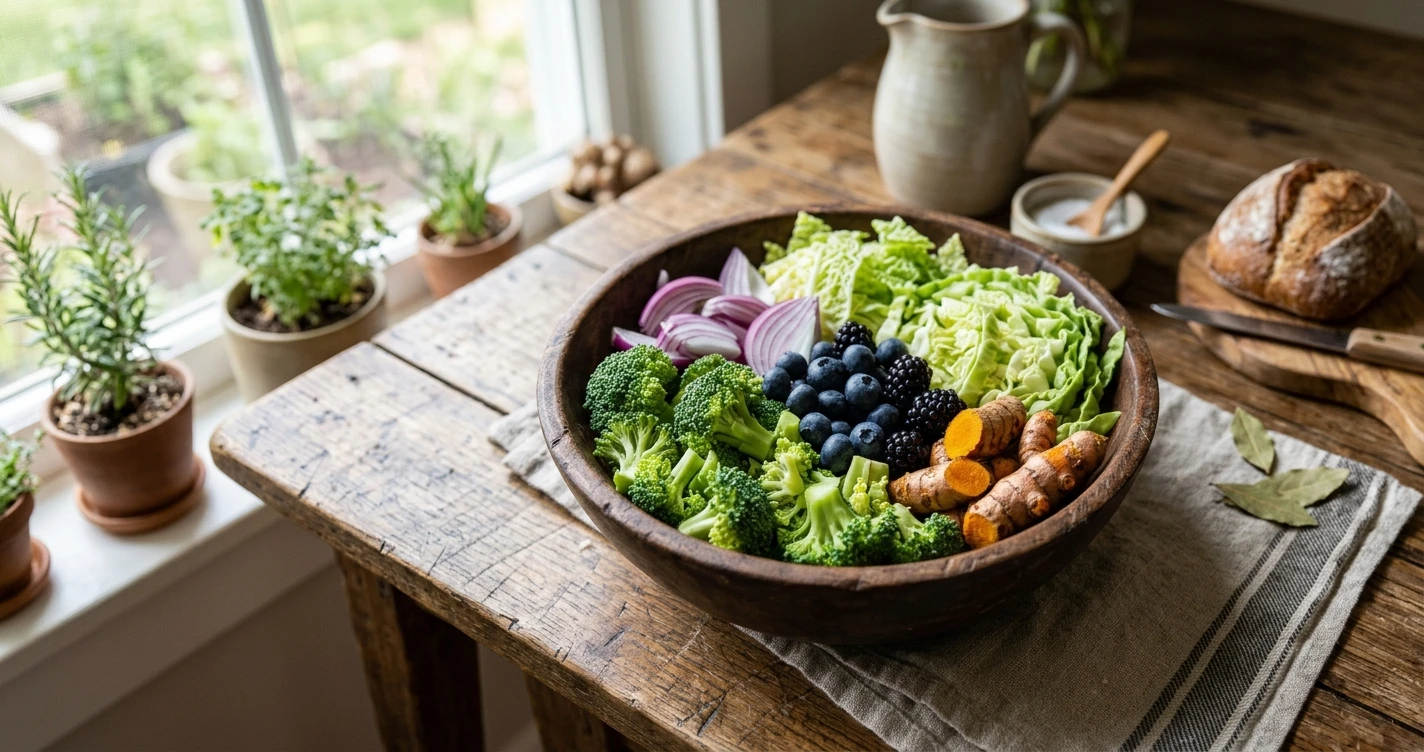
If you are following the Wahls™ diet plans, you are already supporting both phase 1 and phase 2 pathways. That is one reason I ask people to eat nine cups of vegetables and fruit each day: three cups of leafy greens, three cups of sulfur-rich vegetables (the cabbage family, onion family, and mushrooms), and three cups of deeply colored vegetables and berries. The sulfur-rich vegetables are especially important for detoxification.
If you are just getting started on improving your nutrition:
- Eat more cabbage family vegetables (broccoli, cabbage, kale, Brussels sprouts), onion family vegetables, and brightly colored vegetables and berries.
- Cook with culinary herbs and spices such as ginger, turmeric, parsley, and rosemary, which also support both phase 1 and phase 2 pathways.
- Eat enough fiber to have a soft bowel movement each day. Constipation slows down the detoxification process.
- Add fermented foods like sauerkraut or kimchi to your meals.
Targeted Supplements for Phase 1 and Phase 2 Detoxification
Targeted supplements are a crucial tool to help ensure that both phase 1 and phase 2 pathways are working well in your liver and kidneys. Here are my top recommendations.
Milk thistle contains silymarin, a compound that increases glutathione and helps the liver remove toxins more efficiently.(8) Silymarin supports tissue repair and detoxification, helps calm inflammation, and is associated with healthier blood sugar and blood pressure.(8,9)
Alpha-lipoic acid also supports glutathione metabolism. It helps regenerate vitamins C and E, supports coenzyme Q10 function in the mitochondria, and supports the clearance of mercury, lead, and cadmium.(10,11)
Methylselenocysteine is a well-tolerated form of selenium. Selenium and manganese support glutathione pathways and manganese superoxide dismutase activity, which protects cells from oxidative stress, helps reduce inflammation, and supports detoxification.(12)
N-acetylcysteine (NAC) raises glutathione levels inside cells, supports detoxification, and reduces oxidative stress.(13)
Calcium D-glucarate supports glucuronidation, a key phase 2 pathway, along with detoxification and estrogen metabolism.(14)
5-methyltetrahydrofolate (5-MTHF) supports methylation and phase 1 and phase 2 detoxification pathways.
Additional phytonutrients also support antioxidant and detoxification pathways.(15,16)
- Green tea catechins help mop up free radicals and support phase 1 and phase 2 detoxification.(17,18)
- Resveratrol and quercetin are potent antioxidants that support phase 1 detoxification.(19,20)
- Pterostilbene, a methylated form of resveratrol, further boosts the effectiveness of quercetin as an antioxidant and anti-inflammatory regulator.(21)
- Turmeric extract is an excellent source of curcumin, which supports phase 1 and phase 2 detoxification and reduces inflammation and oxidative stress.(22,23) Piperine, from black pepper, increases the absorption of curcumin and other nutrients into the bloodstream.(24)
- Diindolylmethane (DIM) and glucoraphanin support a healthier balance of estrogen metabolites.(15,25) Together they shift the balance of 2-OH, 4-OH, and 16 alpha-OH estrogen metabolites by inducing phase 1 cytochrome P450 enzymes and promoting 2-OH hydroxylation.(15,25)
- Glucoraphanin, which the body converts to sulforaphane, complements DIM by supporting phase 2 detoxification and reducing oxidative stress.(15,16,26)
To make this simpler, these phase 1 and phase 2 nutrients are combined in my Dual Phase Detox.
Other Ways to Support Your Detox
- Keep things moving. Have a bowel movement every day. Eat plenty of fiber.
- Sweat. If you tolerate it, consider adding a sauna to your routine.
- Soak. Epsom salt or Dead Sea mineral soaks are also helpful.
- Check your estrogen metabolites. If you have a family history of breast cancer, consider asking your clinician to check your estrogen metabolites to see what the balance looks like and whether additional support is needed.
Do this alongside your medical team, not instead of them. This is especially important if you take prescription medications, since several of these supplements affect liver enzymes that also process drugs.
Summary
Reducing heavy metal exposure and improving hormone balance is critical to the normal function of our biochemistry. Cutting your exposure to heavy metals, xenobiotics, and xenoestrogens helps reduce inflammation and oxidative stress and restore normal hormone function. A multivitamin/multimineral is very helpful, because mineral insufficiencies make you more vulnerable to heavy metal poisoning.
If you live in modern society, reducing toxin exposures will help you. Then support your detoxification pathways with food first and targeted supplements for both phase 1 and phase 2. This improves your clearance of heavy metals, xenobiotics, xenoestrogens, and other synthetic chemicals that add to your inflammation and oxidative stress and disrupt your hormones.
Ready to Start Your Dual Detox?
Here is how to take your next step this week:
- Pick one exposure to cut. Swap your plastic water bottle for glass or stainless steel, or replace one scented product with a fragrance-free version.
- Add one cup of sulfur-rich vegetables to your day, working toward the full three cups.
- Support both phases of detoxification with targeted supplements (see below).
Shop the Dual Detox Supplements
Start with a kit (the simplest option):
- Wahls Protocol® Detoxification Support kit: Advanced Multi, Dual Phase Detox, and NAC together, covering mineral support plus phase 1 and phase 2 detoxification.
- Complete Cleanse Detoxification Support kit: everything in the Detoxification Support kit plus Ultra Binder, to help carry toxins out through the gut.
Or choose individual products:
- Advanced Multi: a multivitamin/multimineral to help close the mineral gaps that leave you more vulnerable to heavy metals.
- Dual Phase Detox: phase 1 and phase 2 liver detoxification support.
- NAC: N-acetylcysteine, a building block for glutathione, your body’s master antioxidant.
- MTHFR Complete: methylation support, for people who want extra help with the methylation pathways that feed detoxification.
- Cytokine Modulator: Nrf2 pathway and antioxidant support, the same pathway sulforaphane works through.
Browse all of my supplements at terrywahls.com/products.
Not sure which diet fits your body, your symptoms, and your household? That is exactly what my new book, The Wahls Spectrum, helps you figure out. It comes out March 16, 2027.
References
- Fukami M, et al. Aromatase excess syndrome: a rare autosomal dominant disorder leading to pre- or peri-pubertal onset gynecomastia. Pediatr Endocrinol Rev. 2014;11(3):298-305.
- Patel S, et al. Estrogen: the necessary evil for human health, and ways to tame it. Biomed Pharmacother. 2018;102:403-411.
- Xu X, et al. The effect of aromatase on the reproductive function of obese males. Horm Metab Res. 2017;49(8):572-579.
- Colborn T, vom Saal FS, Soto AM. Developmental effects of endocrine-disrupting chemicals in wildlife and humans. Environ Health Perspect. 1993;101(5):378-84.
- Nadal A, et al. Nongenomic actions of estrogens and xenoestrogens by binding at a plasma membrane receptor unrelated to estrogen receptor alpha and estrogen receptor beta. Proc Natl Acad Sci U S A. 2000;97(21):11603-8.
- Singleton DW, Khan SA. Xenoestrogen exposure and mechanisms of endocrine disruption. Front Biosci. 2003;8:s110-8.
- Liska DJ. The detoxification enzyme systems. Altern Med Rev. 1998;3(3):187-98.
- Wadhwa K, et al. Mechanistic insights into the pharmacological significance of silymarin. Molecules. 2022;27(16).
- Pradhan SC, Girish C. Hepatoprotective herbal drug, silymarin from experimental pharmacology to clinical medicine. Indian J Med Res. 2006;124(5):491-504.
- Bjorklund G, et al. A review on coordination properties of thiol-containing chelating agents towards mercury, cadmium, and lead. Molecules. 2019;24(18).
- Shay KP, et al. Alpha-lipoic acid as a dietary supplement: molecular mechanisms and therapeutic potential. Biochim Biophys Acta. 2009;1790(10):1149-60.
- Shilo S, Pardo M, Aharoni-Simon M, Glibter S, Tirosh O. Selenium supplementation increases liver MnSOD expression: molecular mechanism for hepato-protection. J Inorg Biochem. 2008;102(1):110-8.
- Bauerlein DK, et al. Benefit of N-acetylcysteine in postoperative hepatic dysfunction: case report and review of literature. Case Reports Hepatol. 2019;2019:4730381.
- Calcium-D-glucarate. Altern Med Rev. 2002;7(4):336-9.
- Bolton JL, Thatcher GR. Potential mechanisms of estrogen quinone carcinogenesis. Chem Res Toxicol. 2008;21(1):93-101.
- Keum YS. Regulation of the Keap1/Nrf2 system by chemopreventive sulforaphane: implications of posttranslational modifications. Ann N Y Acad Sci. 2011;1229:184-9.
- Shankar S, Ganapathy S, Srivastava RK. Green tea polyphenols: biology and therapeutic implications in cancer. Front Biosci. 2007;12:4881-99.
- Brown MD. Green tea (Camellia sinensis) extract and its possible role in the prevention of cancer. Altern Med Rev. 1999;4(5):360-70.
- Adnan M, et al. Radioprotective role of natural polyphenols: from sources to mechanisms. Anticancer Agents Med Chem. 2022;22(1):30-39.
- Chen XW, et al. Herbal bioactivation, molecular targets and the toxicity relevance. Chem Biol Interact. 2011;192(3):161-76.
- Ferrer P, et al. Association between pterostilbene and quercetin inhibits metastatic activity of B16 melanoma. Neoplasia. 2005;7(1):37-47.
- Choi H, et al. Curcumin attenuates cytochrome P450 induction in response to 2,3,7,8-tetrachlorodibenzo-p-dioxin by ROS-dependently degrading AhR and ARNT. Cancer Sci. 2008;99(12):2518-24.
- Jurenka JS. Anti-inflammatory properties of curcumin, a major constituent of Curcuma longa: a review of preclinical and clinical research. Altern Med Rev. 2009;14(2):141-53.
- Shoba G, et al. Influence of piperine on the pharmacokinetics of curcumin in animals and human volunteers. Planta Med. 1998;64(4):353-6.
- Kim EJ, et al. Oral administration of 3,3’-diindolylmethane inhibits lung metastasis of 4T1 murine mammary carcinoma cells in BALB/c mice. J Nutr. 2009;139(12):2373-9.
- Boddupalli S, et al. Induction of phase 2 antioxidant enzymes by broccoli sulforaphane: perspectives in maintaining the antioxidant activity of vitamins A, C, and E. Front Genet. 2012;3:7.